

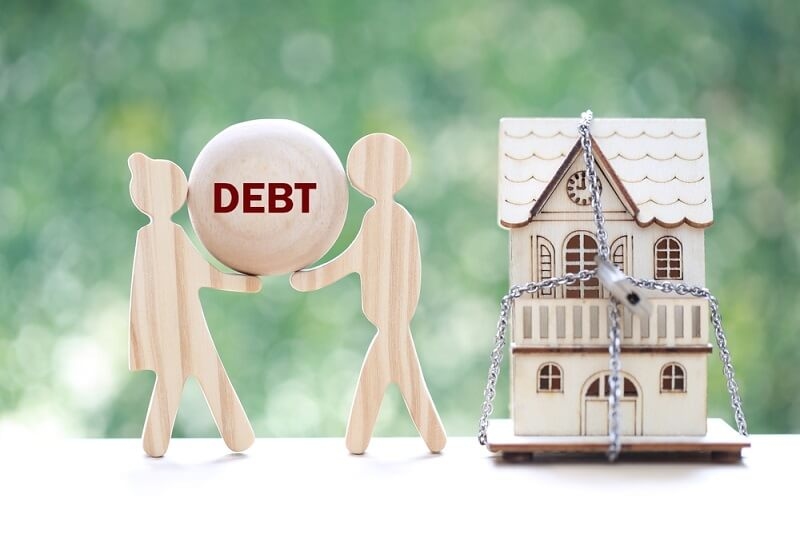
Before we get into the details, here’s a quick roadmap. We’ll look at where the average mortgage debt stands in 2026 in the United States, how mortgage debt statistics compare to past years, what home loan debt trends reveal, and how mortgage rates in 2026 are shaping monthly payments. Along the way, we’ll talk about what an average mortgage balance really means for your own budget. By the end, you’ll have a clearer sense of whether you’re ahead of the curve or playing catch-up.
If you’ve checked your mortgage statement lately and felt a little jolt, you’re not alone. The average mortgage debt in 2026 in the US has continued its steady climb, largely due to rising home prices and higher borrowing costs. The typical average mortgage balance now sits well above what it was just a few years ago.
But numbers alone don’t tell the whole story. Mortgage debt statistics can feel cold and abstract. Your mortgage, on the other hand, feels very real. It’s the monthly draft from your checking account. It’s the long-term promise you made when you signed those papers.
So let’s break it down in plain English.
The average mortgage balance in 2026 reflects both inflated home values and the lingering effect of higher interest rates. Homeowners who bought between 2021 and 2023 often locked in low rates, but those who purchased later faced steeper mortgage rates in 2026, pushing loan amounts higher over time.
In many parts of the country, especially in states like California, Texas, and Florida, the average mortgage balance has crossed levels that once seemed extreme. Even in more affordable markets across the Midwest, balances are creeping up.
Here’s the key thing. An average does not equal normal. Some borrowers carry much less. Others owe far more. Your position depends on:
And yes, luck plays a small part too.
US mortgage debt has grown steadily over the last decade. After the 2008 housing crash, lending standards tightened. Borrowers were cautious. Banks were cautious, too. Then came years of low rates and rising demand.
Home loan debt trends since 2020 have been especially interesting. First, record low interest rates encouraged buying and refinancing. Then, sharp increases in mortgage rates slowed activity but did not significantly reduce balances. Why? Because prices had already surged.
Think of it like climbing a hill. Once you’re halfway up, even if the path gets steeper, you’re still higher than where you started.
Don't Miss: 5 Crucial Steps to Take When Your Emergency Fund Ends Now
Numbers can be intimidating, but they also clarify things. Let’s step back and look at broader mortgage debt statistics so we can see where 2026 fits into the bigger picture.
These figures reflect national averages. Your zip code may tell a different story, but trends still matter.
In 2026, the gap between high-cost and low-cost regions remains wide. Coastal states and major metro areas continue to carry higher average mortgage balances. Meanwhile, some Midwestern and Southern markets offer relatively modest loan amounts.
This creates a strange dynamic. A $350,000 mortgage in Ohio might feel large in parts of California, which barely covers a starter condo.
So when you compare yourself to national averages, keep geography in mind. Real estate has always been local.
Mortgage rates 2026 have settled into a range that is higher than the ultra-low era of 2020 and 2021. Even a one percent difference in rate can add hundreds of dollars to a monthly payment.
Let me explain with a simple idea. Two borrowers may have the same loan amount. One locked in at 3 percent. The other signed at 6.5 percent. Their monthly obligations are dramatically different.
That difference shapes everything:
So yes, your rate matters just as much as your balance.
Suggested Reading: Revenge Saving Trend: Regain Control and Build Wealth
Now let’s connect the dots. Home loan debt trends are not just about how much people owe. They also reveal how households manage risk, respond to interest rates, and adjust to economic shifts.
Here’s a mild contradiction that confuses many homeowners. People today often have more equity than they did five years ago. Home values rose quickly. That sounds positive.
Yet monthly payments feel heavier for newer buyers. Why? Higher mortgage rates in 2026 mean larger interest costs, even if price growth has slowed.
So someone who bought in 2020 might have:
Someone who bought in 2025 might have:
Both own homes. Both build wealth. But their experiences feel very different.
Millennials and Gen Z buyers are entering the market with higher starting balances. Student loans, higher living costs, and competitive housing markets all play a role.
It’s not necessarily reckless. It’s structural. When home prices rise faster than incomes, average mortgage balance levels rise too.
You know what’s interesting? Many younger buyers are still choosing to buy despite this. They see housing as long-term stability. And historically, that logic has often paid off.
Also Read: Master Your Credit Score 101 for a Brighter Financial Future
The average mortgage debt in 2026 reflects higher home prices, steady US mortgage debt growth, and mortgage rates in 2026 that are no longer at historic lows. The average mortgage balance has risen, and home loan debt trends suggest this pattern may continue, though at a slower pace.
But averages do not define you. Your income, your rate, your equity, and your goals matter more than national mortgage debt statistics.
If your payments are manageable and your financial foundation is solid, you’re likely ahead in the ways that count. And if you feel stretched, small smart changes can shift your trajectory over time.
The average mortgage debt in 2026 reflects higher home prices and elevated rates. Most borrowers carry larger balances than they did five years ago.
Higher mortgage rates in 2026 increase total interest costs. Even a small rate jump can significantly raise monthly payments.
Not necessarily. If your income supports the payment and you are building equity, a higher balance can still be manageable.
Home loan debt trends show rising balances but slower price growth. Borrowers are adjusting to steadier, higher-rate conditions.
This content was created by AI